
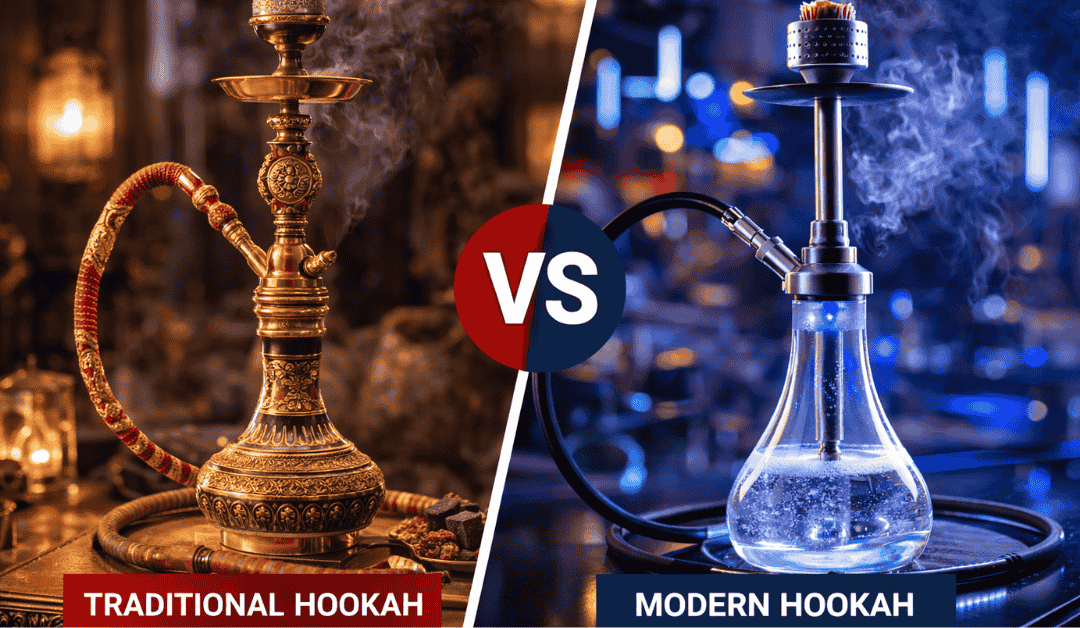
Traditional vs Modern Hookah: Key Differences and Features
Hookah has been part of social culture for centuries. You see it in lounges, homes, and at gatherings across the world. But if you have spent any time shopping for one, you already know they are not all the same.
Some follow designs that go back hundreds of years. Others are built around new materials and airflow systems. Both get the job done, but the experience they deliver is quite different.
Here is what you actually need to know before picking one.
Traditional Hookah: Built on Heritage
Traditional hookahs have changed very little over the centuries. Their designs reflect the cultures they come from — Turkish, Egyptian, and Indian styles are the most common. If you are buying one, you are essentially buying a piece of that history.
What defines a traditional hookah:
- Handcrafted metalwork — brass, copper, or stainless steel, often with engraved patterns. No two pieces look exactly alike
- Tall, heavy build — the weight keeps it stable and gives it a solid, permanent feel
- Tighter airflow — narrower internal paths create more resistance, which produces denser, more concentrated smoke
- Cultural design details — carved stems, decorative bases, patterned trays
The tighter draw is something experienced smokers either love or dislike. It produces thick smoke with stronger flavor, but you have to pull harder to get it. If you are used to modern hookahs, it takes some getting used to.
Modern Hookah: Built for Performance
Modern hookahs keep the same basic concept but redesign everything around convenience and smoke output. The materials are lighter, the parts come apart easily, and the airflow is much more open.
What defines a modern hookah:
- Lighter materials — aluminum, acrylic, and carbon fiber replace heavy brass. Rust is not a concern
- Open airflow system — wider channels mean less resistance, easier pulls, and larger clouds
- Modular design — most parts detach completely, which makes cleaning fast and allows customization
- Minimal or artistic look — some go sleek and simple, others go bold with colors and geometric shapes
If you want big clouds and a smooth draw with less effort, modern hookahs are built for that. They are also more forgiving for beginners because the open airflow makes it easier to get smoke going. A good example is the Foggit Alexander by VG France — 24-inch stainless steel build, open airflow, comes with an HMD and carrying bag right out of the box.
How They Compare Side by Side
|
Feature |
Traditional |
Modern |
|
Draw style |
Tight, requires more pull |
Open, smooth and easy |
|
Smoke output |
Dense, concentrated |
Large clouds |
|
Weight |
Heavy and stable |
Light and portable |
|
Cleaning |
Harder, fixed parts |
Easy, fully disassembles |
|
Design |
Ornate, cultural |
Minimal or artistic |
|
Durability |
Decades with proper care |
Strong but depends on material |
|
Best for |
Home use, flavor depth |
Travel, cloud production, beginners |
Materials: Why They Matter More Than You Think
Traditional hookahs use brass or copper. These metals hold heat well and can last decades. Over time, they develop a natural patina. Some people find that character. Others find it maintenance.
Modern hookahs use aluminum or stainless steel. Both resist corrosion and stay clean. Acrylic bases are common too — lighter and less fragile than glass, though they can scratch over time.
Neither is objectively better. If you want something that lasts 20 years and looks like an heirloom, brass wins. If you want something you can throw in a bag without worrying, aluminum is more practical.
Airflow and What It Does to Your Session
This is where the two types feel the most different in real use.
Traditional hookahs have narrower internal paths. The resistance slows the smoke down and concentrates it. Many experienced users say this brings out more flavor depth. The tradeoff is that you work harder for every pull.
Modern hookahs use wider channels and diffuser systems. Smoke moves quickly and quietly. You get long, effortless draws and thick clouds. If cloud volume matters to you, modern hookahs are the clear choice.
Portability
Traditional hookahs are designed to stay in one place. They are heavy, often tall, and not built for travel. They belong on a coffee table or in a lounge, not a backpack.
Modern hookahs are much easier to move around. Some are compact enough to fit in a bag or a car. If you want to smoke outdoors, at a friend's place, or on a road trip, a portable car hookah makes that practical without giving up smoke quality.
Which One Should You Choose?
Go with traditional if:
- You want something that looks and feels like a cultural piece
- You prefer dense, flavorful smoke over large clouds
- You mostly smoke at home and want a display piece
- You enjoy the ritual of a heavier, more deliberate setup
Go with modern if:
- You want big clouds and smooth, effortless draws
- You travel or move your hookah between places
- You are a beginner who wants less friction getting started
- You want easy cleaning and modular customization
Many experienced hookah users end up owning both. A traditional hookah for slower sessions at home, and a modern one for when they are on the move or smoking with a group.
Final Thought
Neither type is better. They are just built for different things. Traditional hookahs connect you to craft and history. Modern ones are designed around comfort and performance.
The right one depends on how you smoke, where you smoke, and what matters more to you — flavor depth or cloud size, portability or permanence. Once you are clear on that, the choice is straightforward.